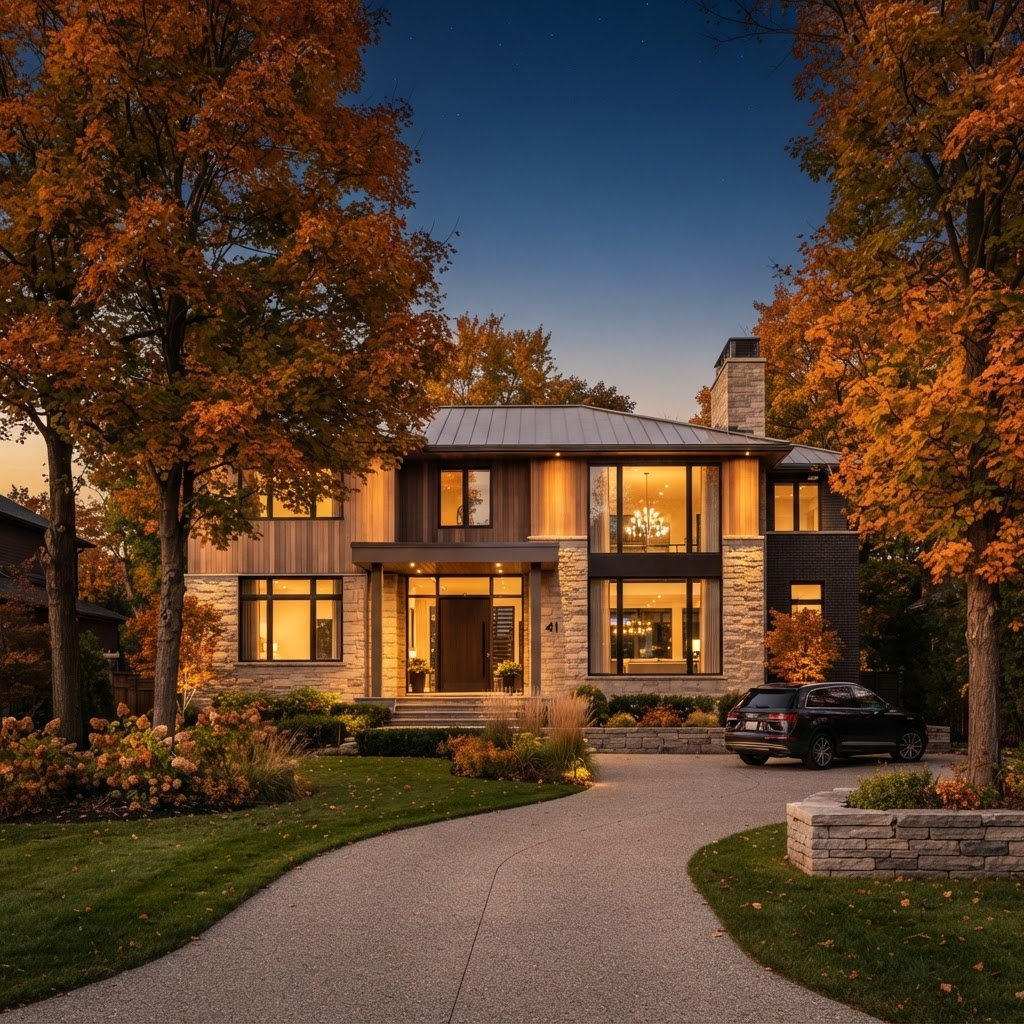
Up to $130,000 Back: The 2026 First-Time Buyer Incentive Stack Every Ontario Buyer Should Know


Key Takeaways
- First-time buyers of new homes can stack a federal GST rebate of up to $50,000 with an Ontario HST rebate of up to $80,000 — up to $130,000 combined on qualifying new builds.
- The full rebates apply to new homes up to $1 million, phasing out on a sliding scale between $1 million and $1.5 million; purchase agreements must be signed between March 20, 2025 and 2031.
- First-time buyers and all buyers of new builds can access 30-year amortizations on insured mortgages, cutting monthly payments meaningfully versus 25 years.
- The insured mortgage cap of $1.5 million means down payments under 20% are possible on homes that were cash-locked under the old $1M ceiling — critical in Toronto, Mississauga and Oakville.
- Stack the FHSA ($8,000/year, $40,000 lifetime), the RRSP Home Buyers’ Plan ($60,000), and Ontario’s land transfer tax refunds on top for the complete picture.
The single most expensive mistake I see first-time buyers make in 2026 is not a rate mistake — it is leaving free money on the table. The incentive landscape for Canadian first-time buyers has changed more in the last eighteen months than in the previous decade, and most buyers I meet know about only one or two pieces of it.
If you are buying your first home in Ontario — especially a new build in growth markets like Brampton, Milton, Barrie, Whitby or Kitchener — the full stack can be worth well over a hundred thousand dollars. Here is every layer, in the order you should think about them.
Layer 1: The New-Build Rebate Stack — Up to $130,000
The headline change: first-time buyers purchasing a newly built home can now combine a federal GST rebate of up to $50,000 with an Ontario HST rebate of up to $80,000 — a combined maximum of $130,000 on qualifying purchases. Both rebates apply in full to new homes valued up to $1 million, then phase out on a sliding scale between $1 million and $1.5 million. At or above $1.5 million, no rebate applies.
The eligibility window matters: your purchase agreement must be signed between March 20, 2025 and 2031, you must be a first-time buyer, and the home must be your principal residence. On a $900,000 new townhome in Milton or a pre-construction detached in Brampton’s Mayfield West, this single layer can offset the sales tax burden almost entirely — money that flows directly back into your closing costs or down payment.
Layer 2: The 30-Year Amortization — Your Payment Lever
First-time buyers with insured mortgages — and all buyers of new builds — can access 30-year amortizations instead of the traditional 25-year insured maximum. On a $700,000 mortgage near today’s representative 5-year fixed rate of 5.05%, stretching from 25 to 30 years cuts the monthly payment by roughly $300 — often the difference between qualifying for the home you want and settling.
The trade-off is more total interest over the life of the loan, but the strategy is not permanent: prepayment privileges of 15–20% per year at most lenders let you compress the timeline aggressively once your income grows. Start at 30 years for qualification and cash-flow room; behave like a 25-year borrower when you can.
Layer 3: The $1.5 Million Insured Cap — The GTA Unlock
The insured mortgage price cap sits at $1.5 million, up from the old $1 million ceiling. This is the change that matters most in Toronto, Mississauga, Oakville and Richmond Hill, where family-sized homes routinely price above $1 million. Under the old rules, crossing $1M meant a mandatory 20% down payment; today, a $1.2 million semi in East Toronto is accessible with roughly $95,000 down instead of $240,000.
Minimum down payments in this range run 5% on the first $500,000 and 10% on the portion above it. Mortgage default insurance premiums apply, but for buyers with strong incomes and limited savings — very common among first-time buyers in the GTA — the cap change converts “impossible” into “planned.”
Layer 4: FHSA + RRSP Home Buyers’ Plan — The Down Payment Engines
- FHSA (First Home Savings Account): contribute $8,000 per year to a $40,000 lifetime maximum. Contributions are tax-deductible like an RRSP, and qualifying withdrawals are tax-free like a TFSA — the single best savings vehicle ever offered to Canadian first-time buyers. A couple can shelter $80,000.
- RRSP Home Buyers’ Plan: withdraw up to $60,000 per person ($120,000 per couple) from your RRSP tax-free, repayable over 15 years.
- Stack them: a couple maximizing both vehicles can assemble $200,000 of tax-advantaged down payment — before a dollar of regular savings.
Layer 5: Land Transfer Tax Refunds — The Ontario Closing-Day Bonus
Ontario refunds first-time buyers up to $4,000 of provincial land transfer tax. Buying within the City of Toronto adds a municipal land transfer tax — and a separate first-time buyer rebate of up to $4,475 against it. Combined, a first-time buyer in Toronto can keep up to $8,475 that repeat buyers must pay on closing day.
Putting It Together: A Brampton New-Build Example
Consider a first-time-buyer couple purchasing a $950,000 new-build townhome in Brampton. The GST/HST rebate stack offsets a large share of the embedded sales tax. They qualify with a 30-year insured amortization, keeping the payment manageable at today’s rates. Their combined FHSA and HBP savings fund the down payment tax-efficiently, and the $4,000 provincial land transfer refund lands on closing. The same couple, unaware of the stack, would have either overpaid by tens of thousands — or concluded they could not buy at all.
The government does not mail you these incentives automatically. Every layer of the stack has paperwork, timing rules, and eligibility tests — and the buyers who capture all of them are the ones who planned the purchase around the rules, not the other way around.
If you are planning a first purchase anywhere in Ontario in the next twelve months, let’s map your personal version of this stack before you start touring properties. The order of operations — what to open, when to sign, and which lender to use — determines how much of the $130,000 ceiling you actually capture. The consultation is free, and the lender pays my compensation, not you.
Frequently Asked Questions
How much can first-time buyers get back on a new home in Ontario in 2026?
First-time buyers purchasing qualifying new-construction homes can combine a federal GST rebate of up to $50,000 with an Ontario HST rebate of up to $80,000 — up to $130,000 total. Full rebates apply to homes up to $1 million, phasing out between $1 million and $1.5 million.
Who qualifies for the new GST rebate for first-time buyers?
You must be a first-time home buyer, the home must be newly built and your principal residence, and your purchase agreement must be signed between March 20, 2025 and 2031. Homes valued at $1.5 million or more do not qualify.
Can first-time buyers get a 30-year mortgage in Canada?
Yes. First-time buyers with insured mortgages, and all buyers of new builds, can access 30-year amortizations. On a $700,000 mortgage near 5.05%, the 30-year option lowers the monthly payment by roughly $300 versus 25 years.
What is the minimum down payment on a $1.2 million home now?
With the insured mortgage cap at $1.5 million, a $1.2 million home no longer requires 20% down. The minimum is 5% of the first $500,000 plus 10% of the remaining $700,000 — roughly $95,000, versus $240,000 under the old rules.
Do the GST/HST rebates apply to resale homes?
No — the new-build rebate stack applies to new construction only. Resale first-time buyers still benefit from the 30-year insured amortization, the $1.5M insured cap, FHSA and HBP savings vehicles, and Ontario’s land transfer tax refund of up to $4,000 (plus up to $4,475 in Toronto).
Rajesh Chandrasekaran is a licensed Level 1 Mortgage Agent serving all of Ontario with Active Lending, an independently owned and operated franchise of the Mortgage Alliance Network. He helps first-time buyers, renewers, the self-employed and credit-challenged borrowers find the right lender — not just any lender.
Work With Rajesh